

Using Fairy Tales to Enhance Language Skills
Discover how interactive storytelling can aid in developing children's language abilities.
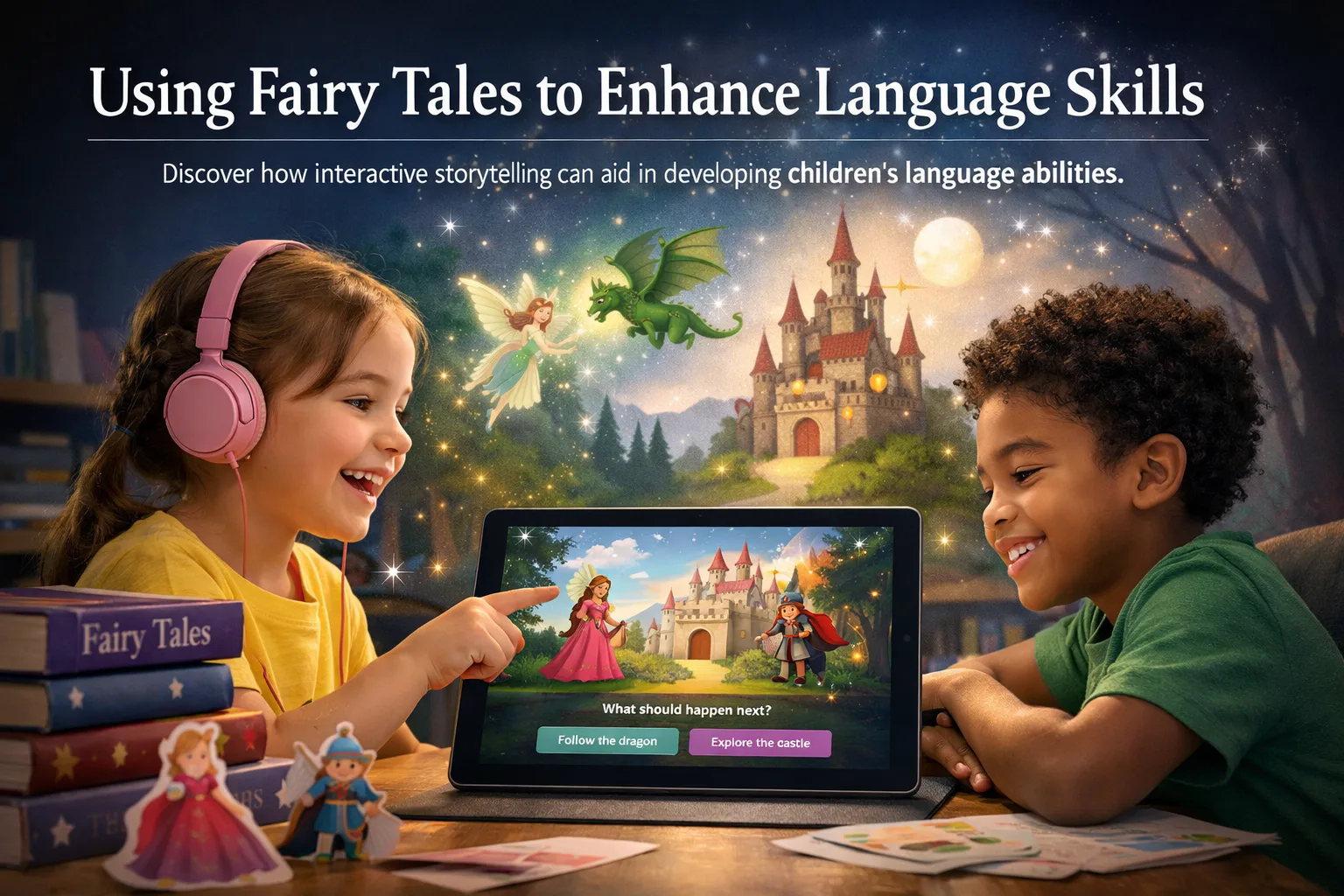
Enhancing children's language skills is a crucial part of their education and social development. One effective way to achieve this is by incorporating fairy tales into their learning. Fairy tales not only captivate young minds but also help expand their vocabulary, improve grammar, and enhance listening skills. Reading these stories can spark imagination and creativity, both of which are vital for language development.
Fairy tales are concise stories that often impart a moral lesson. They can be entirely fictional or inspired by actual events, usually featuring colorful characters and captivating storylines.
How to Encourage Children to Read: 7 Simple Methods
What Are Fairy Tales in Simple Terms?
Fairy tales are concise stories that often impart a moral lesson. They can be entirely fictional or inspired by actual events, usually featuring colorful characters and captivating storylines. Reading fairy tales to children from an early age can significantly influence their development. These stories transport children to different worlds, introducing them to new concepts and ideas, thereby broadening their horizons. The enchanting narratives encourage children to imagine possibilities beyond their immediate surroundings, fostering a sense of wonder and exploration.
How Does This Manifest in Real Life?

Children who regularly listen to fairy tales tend to have a larger vocabulary and a better grasp of language structure. They also become more confident in their communication skills. For instance, while reading the story of Little Red Riding Hood, you might ask your child, "Why did Little Red Riding Hood go to her grandmother's house?" This encourages dialogue. You can also inquire, "What qualities does Little Red Riding Hood possess?" or "What would you do in her situation?" Such questions not only promote speech but also foster critical thinking. By engaging in discussions about the characters and events, children learn to articulate their thoughts clearly and effectively, which is fundamental for their overall language development.
How to Support Your Child with Homework Stress-Free
Why Does This Happen or What Contributes to It?
Fairy tales stimulate children's imaginations, prompting them to think about characters and situations. This allows them to practice speaking in a relaxed environment. Children learn to express their thoughts and feelings through discussions about these stories. Additionally, repeating certain phrases and structures during reading helps reinforce learning. For example, by reiterating phrases from fairy tales, children can more easily remember new words and their meanings. The rhythmic patterns and repetitive structures found in many fairy tales also make them easier for children to understand and remember, further enhancing their language acquisition.
Common Mistakes or Self-Destructive Reactions
Parents often overlook the importance of interaction during reading sessions. Simply reading a story without engaging the child is a significant mistake. It's essential to ask questions and encourage children to share their thoughts. Another common error is neglecting the emotional connection during reading. Children need to feel the characters' emotions to better understand their actions and motivations. When parents fail to connect emotionally with the story, it can lead to a lack of interest in reading from the child’s perspective. Encouraging children to relate their own experiences to the characters’ journeys can foster a deeper understanding and appreciation of the narratives.
What Actually Works in Practice?
- Interactive Reading: Engage children in discussing the plot. Ask them what they think about the characters' actions or how they would react in various situations. This not only makes the reading experience more enjoyable but also enhances comprehension.
- Use of Questions: Pose open-ended questions to stimulate thinking. This helps children not only develop their speech but also their critical thinking skills. Questions like "What do you think will happen next?" encourage predictive thinking.
- Role-Playing: Allow children to act out the roles of characters from the stories. This is not only fun but also beneficial for enhancing their imagination and language skills. Role-playing can help solidify their understanding of character motivations and story arcs.
- Visual Aids: Utilize pictures or illustrations for better comprehension. Visualization helps children better imagine the plot and characters, making the story more engaging.
- Creating Their Own Stories: Encourage children to invent their own tales. This fosters creativity and language skills. You can collaboratively create stories using familiar elements from previously read narratives. This practice not only enhances language skills but also boosts their confidence in storytelling.
When Is Professional Help Needed?
If you notice your child struggling with speech or showing disinterest in reading, it may be time to consult a speech therapist or language development specialist. A professional can help identify the reasons behind these challenges and suggest tailored strategies for your child. It's crucial not to wait until the issue escalates—early intervention can be highly effective. Additionally, monitoring your child's progress can provide insights into whether they are benefiting from the reading strategies employed at home.
Conclusion or Key Takeaway
Utilizing fairy tales as a tool for developing language skills is not only an enjoyable activity but also a powerful educational resource. Engaging children in interactive reading can significantly enhance their communication abilities. Fairy tales allow children to learn new words and phrases while also nurturing their imagination and critical thinking. It's essential to remember that reading should be a pleasurable and fun experience for children. The joy of storytelling can create lasting memories and instill a lifelong love for reading.
FAQ
- Which fairy tales are best for language development?
Select stories with vivid characters and simple plots, such as "The Cat with Boots" or "The Gingerbread Man." These tales are easy to remember and capture children's interest, making them ideal for language development. - How often should I read fairy tales to children?
Regularly, whether daily or several times a week, helps maintain interest in reading. The more children listen to stories, the more they develop their language skills. Consistency is key in reinforcing vocabulary and comprehension. - Should I explain words while reading?
Yes, clarify new words and phrases to expand your child's vocabulary. This also helps establish connections between words and their meanings, enhancing understanding.
When to involve security or IT support
Security support becomes important when suspicious signals repeat, affect delivery, or touch accounts, domains, sites, or customer trust.
- spoofing, phishing, spam spikes, or login alerts keep recurring
- mail delivery, domain reputation, or site availability is affected
- logs show unknown devices, unexpected forwarding rules, or suspicious DNS changes
- the issue may involve customer data, credentials, payments, or production systems
If credentials, customer data, or production infrastructure may be exposed, escalate immediately and preserve logs before changing evidence.
Specialist Profile
If the material is related to a specialist, a button to go to their public profile may be nearby.
Go to Profile