

Games to Enhance Vocabulary Development in Preschool Children
Discover simple yet effective games that can help your child expand their vocabulary and improve their speech.
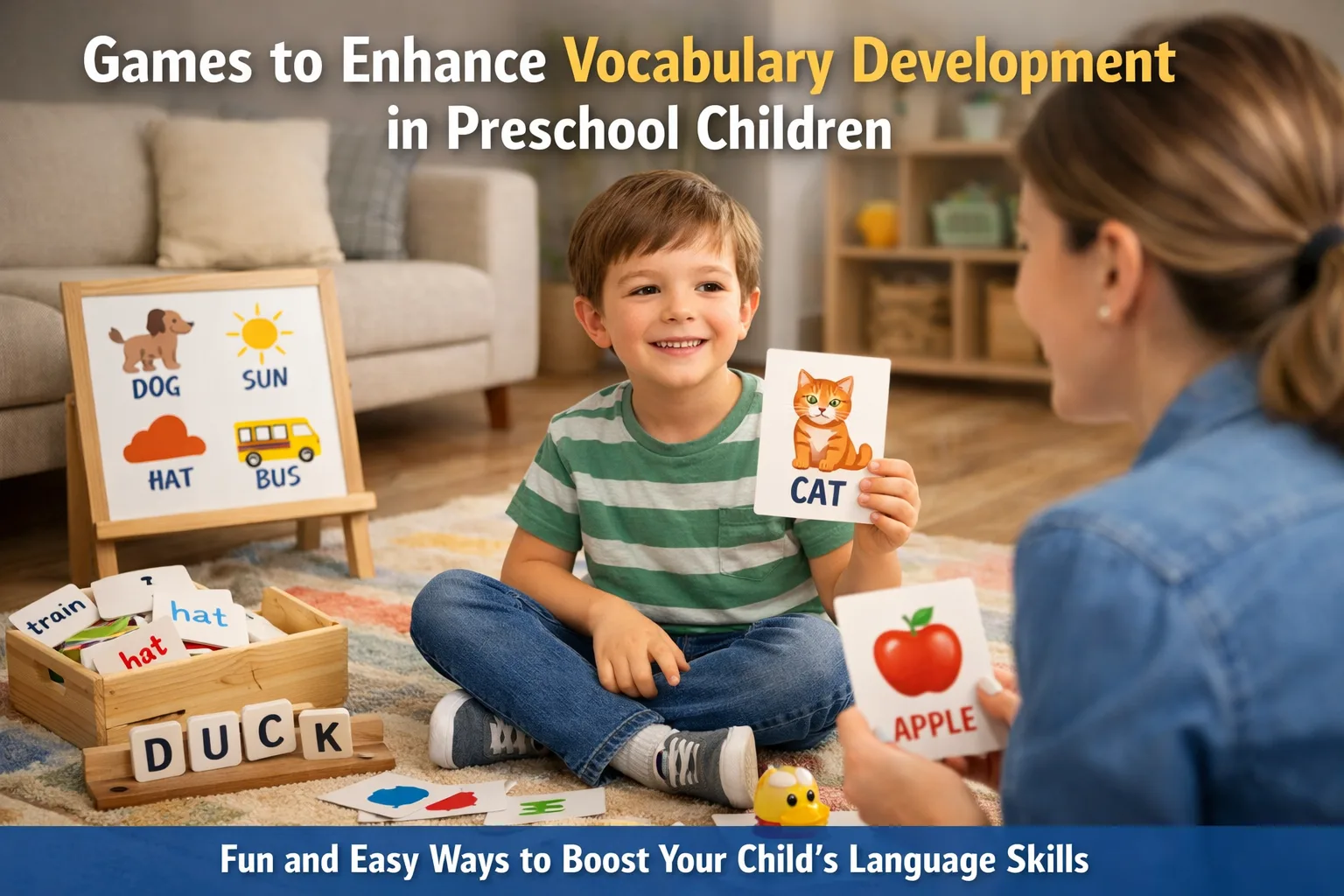
ess their thoughts clearly, which is vital for successful learning.Moreover, vocabulary development is not just about memorizing words; it involves understanding their meanings and how to use them in context.
Why is it important to develop vocabulary in children?
Enhancing vocabulary in preschool children is a crucial part of their education and personal growth. The broader a child's vocabulary, the easier it becomes for them to communicate, comprehend their surroundings, and learn new skills. This not only aids in better information retention but also fosters social connections, as children who can articulate their thoughts often find it easier to relate to their peers. Additionally, a well-developed vocabulary significantly benefits academic performance in school. Children with a strong vocabulary are quicker to absorb new knowledge because they can understand what they read and hear more readily. They are also better equipped to express their thoughts clearly, which is vital for successful learning.
Moreover, vocabulary development is not just about memorizing words; it involves understanding their meanings and how to use them in context. This understanding helps children form sentences and express themselves more clearly. In a world where effective communication is key, having a rich vocabulary sets the foundation for future success in both academic and social settings. Children who can communicate effectively are more likely to engage in discussions, ask questions, and participate actively in their learning processes.
What games can aid vocabulary development?

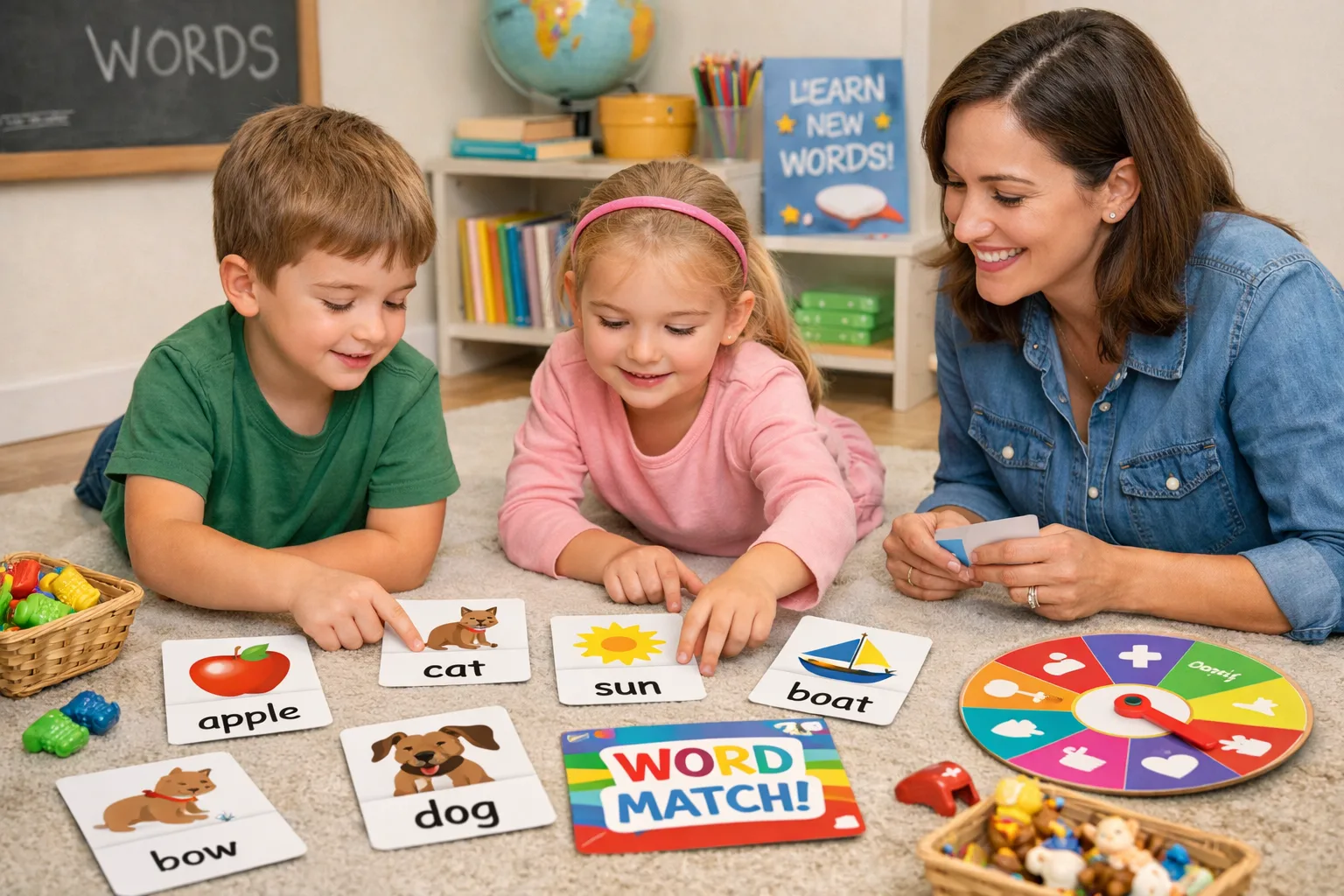
Here are some fun and simple games you can play with your child to enhance their vocabulary:
- Magic Words: Choose a letter and challenge your child to come up with as many words as possible that start with that letter. This can be particularly exciting if you pick a theme, like "animals" or "fruits." For instance, if you choose the letter "B," your child might say "bear," "banana," and "balloon." This game not only stimulates their memory but also encourages them to think creatively.
- Word Associations: Play a game where one of you says a word, and the other has to quickly respond with a word that relates to it. For example, if you say "sun," your child might respond with "hot." This not only builds vocabulary but also sparks creativity as they make connections between different concepts.
- Word Cards: Use cards with pictures and words. Show a card and ask your child to describe what’s depicted. You can also play a game called "Who’s Faster?" where your child must name the word within a short time frame. This can be a fun race against the clock that keeps them engaged.
- Bedtime Stories: Read bedtime stories to your child and discuss any unfamiliar words. Ask your child about the meanings of words they don’t know and explain them in simple terms. This not only enhances their vocabulary but also instills a love for reading.
- Mash-Up Words: Create a new word by combining parts of two different words and ask your child to guess what it is. For example, "catbeet" (cat + beet). This helps develop logical thinking and creativity while introducing them to the concept of compound words.
- Picture Dictionary: Create a picture dictionary together. Each week, choose a new theme (like transportation or food) and find pictures of items related to that theme. Write down the words and definitions together. This can be an ongoing project that your child adds to over time, reinforcing their learning.
How does this look in everyday life?
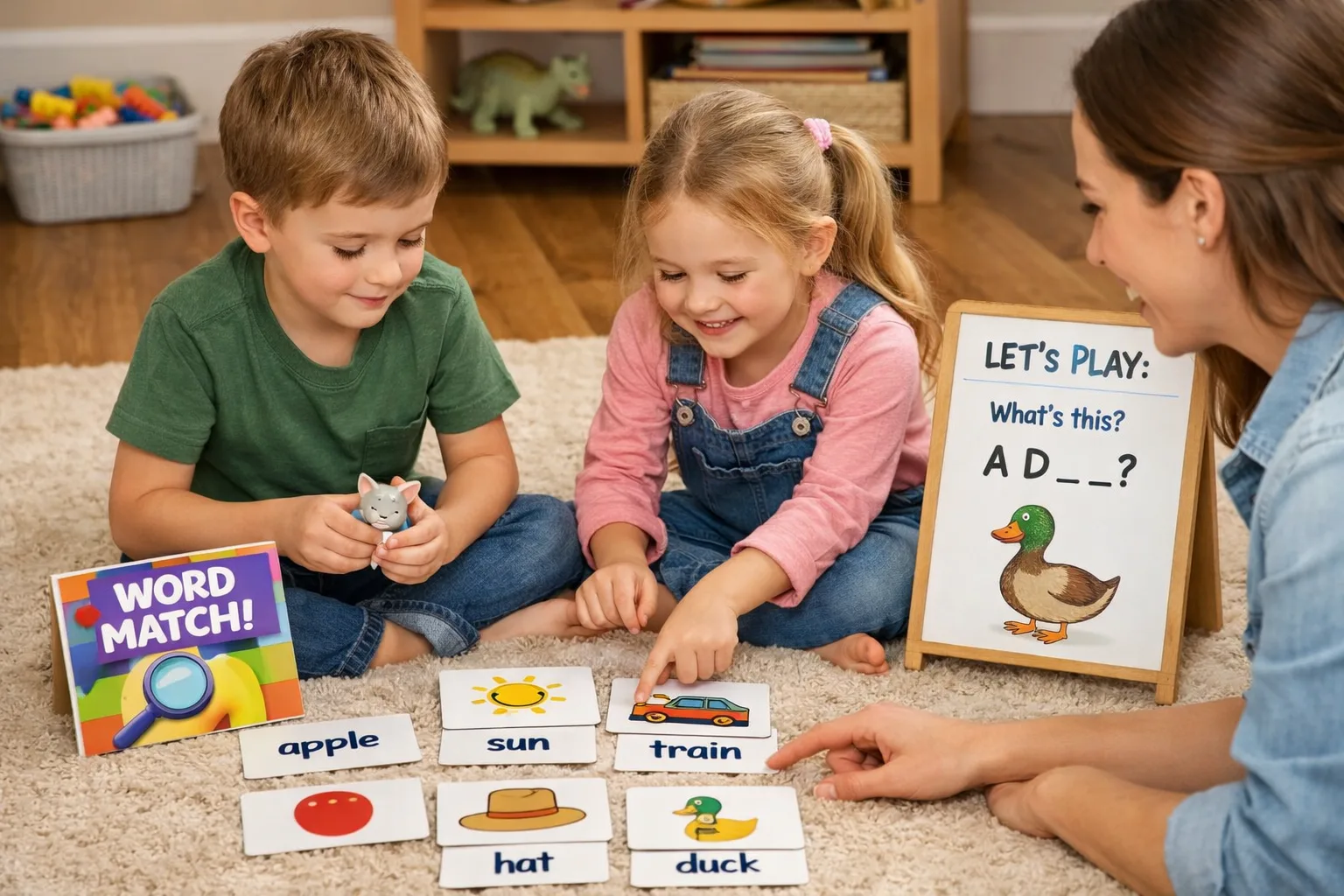
You can incorporate these games into daily activities seamlessly. For instance, during walks, ask your child about everything you see: "What is that? How can we describe it?" This encourages them to use new words in context. If you see a tree, you might ask: "What color are the leaves? What shape do the branches have?" This not only expands vocabulary but also encourages your child to observe the world around them.
Cooking can also be an excellent opportunity for vocabulary building. Ask your child about the ingredients: "What do we need for the salad?" "Which vegetables will we use?" This not only teaches them new words but also helps them understand the cooking process. You can even involve them in measuring ingredients and describing the textures or colors of the food items.
Additionally, during playtime, narrate what your child is doing. If they are building with blocks, you might say, "You are stacking the red block on top of the blue one. What will you build next?" This reinforces language development through practical application and encourages them to express their thoughts verbally.
Common mistakes parents make
Some parents mistakenly believe that vocabulary development happens on its own. It’s essential to actively engage your child in conversation and play. Many parents think that simply reading books is sufficient, but communication is key to language development. Engaging in two-way conversations helps children practice their speaking skills and reinforces their understanding of new words.
Another common error is using overly complex words without explanation. Parents often want to impress their children with new terms, but this can lead to confusion. It’s better to use simple words and explain new terms in an understandable way. For example, instead of saying "magnificent," you might say "very beautiful" and explain what makes something magnificent.
Moreover, some parents may overlook the importance of repetition in vocabulary learning. Children often need to hear words multiple times in different contexts before they fully grasp their meanings. Incorporating new vocabulary into daily conversations will help solidify their understanding.
Simple tips for parents
Here are several tips to help your child enhance their vocabulary:
- Engage in frequent conversations with your child on various topics. Ask open-ended questions that encourage thought and elaboration. Questions like "What was your favorite part of the day?" or "What do you think about this story?" can prompt deeper discussions.
- Read books together and discuss them. After reading, ask your child about their favorite moments or characters. This not only reinforces comprehension but also allows them to express their opinions.
- Don’t hesitate to use new words – explain their meanings. For example, if you use the word "exotic," clarify that it refers to something unusual or rare. This helps broaden their understanding of language.
- Encourage your child to ask questions. This will help them feel more confident in communication and interested in learning new things. Create an environment where curiosity is welcomed and nurtured.
- Play games that require thinking. These could be puzzles, crosswords, or board games that involve word usage. Games like Scrabble or Boggle can be great fun while also enhancing vocabulary.
Developing vocabulary is not only beneficial but also fun! Allow your child to play and learn simultaneously. Engage them in various games and activities so that the learning process remains interesting and exciting. Remember, every moment of conversation is an opportunity for growth! Let your child experience the joy of discovering new words and knowledge!
When to seek professional help
Working with an expert becomes necessary when DIY approaches no longer yield results.
- you are spending too much time without visible progress
- the cost of a mistake is too high
- you need a personalized strategy
A qualified specialist will help you achieve your goals faster and avoid common pitfalls.
Specialist Profile
If the material is related to a specialist, a button to go to their public profile may be nearby.
Go to Profile